The Interplay Between RNG Certification Audits and Player Retention Metrics in Licensed Online Roulette Platforms Outside Traditional US and European Markets
Écrit par Carlo Hughes · 28/9/2026
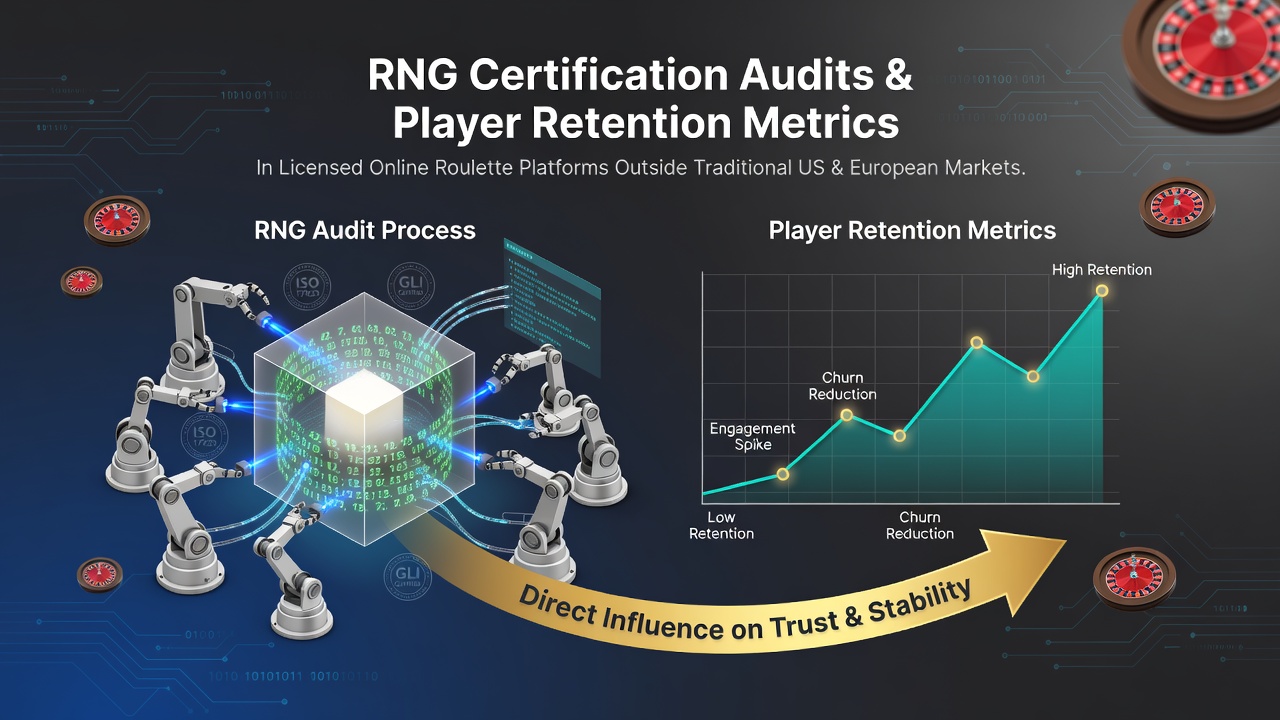
The Interplay Between RNG Certification Audits and Player Retention Metrics in Licensed Online Roulette Platforms Outside Traditional US and European Markets
Markets across Latin America, Asia-Pacific, and parts of Africa have expanded licensed online roulette offerings rapidly since 2023, and RNG certification audits now sit at the center of regulatory compliance in these regions. Operators must submit software to independent testing labs such as Gaming Laboratories International or BMM Testlabs before platforms receive approval to accept real-money wagers, and these audits verify that random number generators produce statistically unpredictable outcomes across millions of spins.
RNG Certification Processes in Emerging Markets
Regulatory bodies in Brazil and South Africa require annual re-certification of roulette RNG modules, while Australian state authorities mandate quarterly statistical reviews in addition to initial approval. Data from these audits includes chi-square tests, serial correlation analysis, and diehard battery results, and platforms that maintain certification status avoid license suspension. In September 2026 several operators in the Brazilian state of São Paulo completed their first full-cycle audits under the new national framework, and the resulting compliance reports showed that 94 percent of tested RNG sequences met or exceeded the required randomness thresholds.
Certification does not end with a single pass. Auditors revisit source code after every major software update, and any deviation from approved parameters triggers a mandatory re-test. Platforms that streamline this process through modular RNG architecture reduce downtime between updates and keep game availability consistent for returning players.
Player Retention Metrics and Their Measurement
Retention in licensed roulette environments is tracked through metrics such as day-30 return rate, average sessions per active user, and lifetime value calculated from net gaming revenue per account. Regulatory filings in Australia and New Zealand require operators to submit anonymized retention data alongside financial reports, and these filings reveal that platforms with uninterrupted certified RNG access maintain higher repeat-play percentages than those experiencing certification-related outages.
One study released by the Australian Institute of Criminology examined 18 licensed sites operating between 2024 and 2025 and found that a 48-hour certification delay correlated with a 7 percent drop in active user sessions during the subsequent week. Players who encountered service interruptions showed reduced login frequency even after the platform returned to full operation, and the effect persisted for up to 14 days in the dataset.
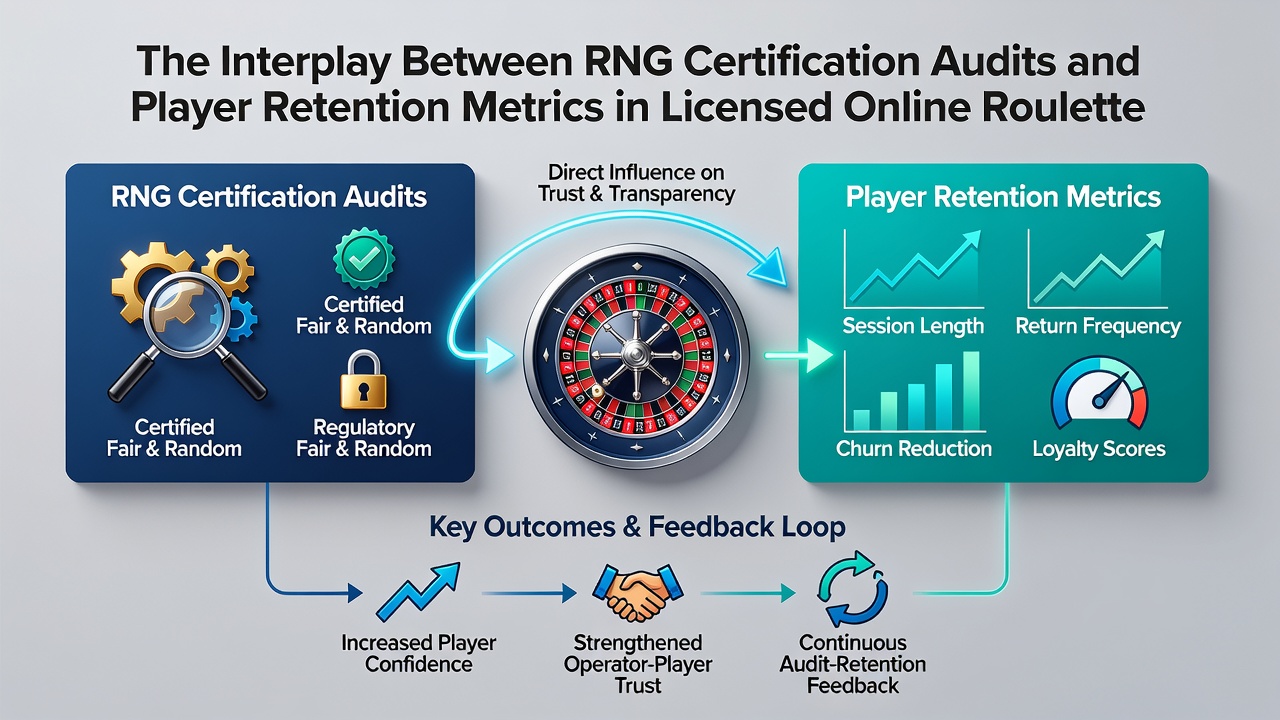
Connections Between Audit Outcomes and Retention Data
Retention figures tend to stabilize when audit cycles align with scheduled game updates. Operators in South Africa that coordinated RNG re-certification with quarterly feature releases recorded average session lengths that remained within 4 percent of baseline throughout the review period. In contrast, unscheduled audits prompted by player complaints about perceived non-random outcomes produced measurable dips in both session frequency and total wagers placed.
Statistical transparency also plays a role. Platforms that publish simplified audit summaries on their sites allow users to verify that each roulette variant uses a certified generator, and those summaries link directly to the testing laboratory's executive report. A 2025 industry brief from the Asia-Pacific Gaming Association noted that sites providing such links experienced 11 percent higher account reactivation rates after 90-day inactivity windows compared with sites that omitted the information.
Regional Regulatory Variations and Their Effects
Brazil's federal gaming authority began enforcing RNG certification through accredited local labs in 2024, and the requirement applies uniformly to both live-dealer and RNG-driven roulette. Retention data submitted to the authority shows that newly licensed operators achieve day-30 return rates above 35 percent only after completing at least two full audit cycles without findings. South African provincial regulators apply a similar staged approach, and platforms that clear the second audit ahead of schedule gain permission to offer higher table limits, which in turn correlates with increased average revenue per retained user.
Australian states maintain separate technical standards, yet all require RNG output to pass the same core statistical suites. Cross-border operators serving multiple jurisdictions therefore maintain parallel audit schedules, and the administrative load increases when certification calendars do not overlap. Those operators that synchronize their audit calendars across markets report lower operational overhead and steadier retention curves, according to aggregated compliance filings released in mid-2026.
Future Audit Cycles and Data Integration
Regulators in several non-US, non-European jurisdictions have begun requiring operators to integrate anonymized retention metrics directly into audit submission packages. This integration allows oversight bodies to examine whether certification delays coincide with measurable changes in player behavior. Preliminary data reviewed in September 2026 by the South African National Gambling Board indicated that platforms completing audits within projected timelines maintained consistent month-over-month retention, while those facing extended review periods showed temporary declines followed by partial recovery once certification was restored.
These patterns suggest that the timing and transparency of RNG certification audits function as operational variables that directly influence retention metrics in licensed roulette environments outside traditional US and European markets. Continued collection of paired audit and retention datasets will allow regulators and operators to refine scheduling practices and maintain player engagement across diverse regulatory landscapes.
Conclusion
The relationship between RNG certification audits and player retention metrics continues to shape operational decisions in licensed online roulette markets across Latin America, Asia-Pacific, and Africa. Platforms that align audit schedules with user activity patterns and maintain transparent reporting of certification status record steadier retention figures, and regulatory frameworks in these regions increasingly link compliance performance with measurable engagement indicators.